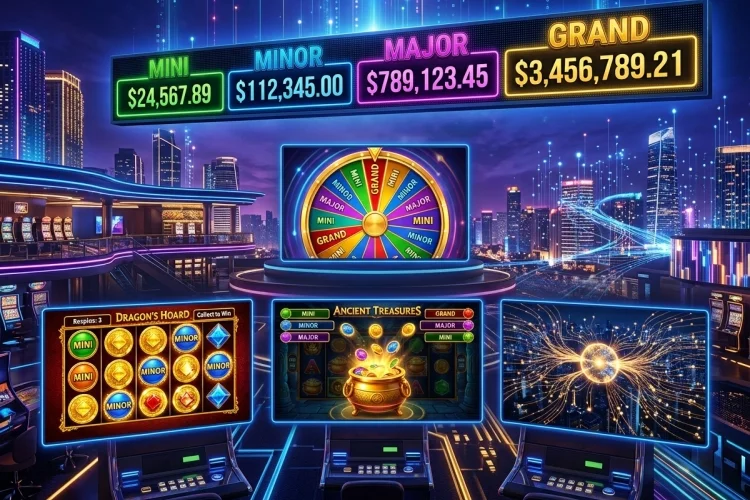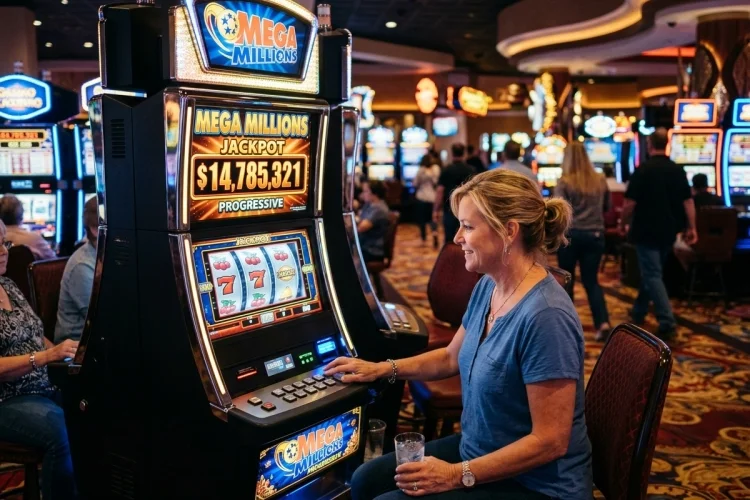
Progressive jackpots create plenty of excitement, but they also attract plenty of myths. When a prize climbs into the millions, it is easy to believe the slot must be ready to pay, that larger bets always have better odds, or that casinos can somehow choose when the jackpot drops.
This guide to Common Myths About Progressive Jackpot Slots separates those assumptions from the mechanics behind regulated games.
Progressive jackpots can use RNG-driven outcomes, winning-symbol triggers, mystery events, or hidden thresholds, so understanding the rules matters far more than trying to spot patterns.
Myth 1: A Jackpot Is “Due” After a Long Dry Spell
One of the oldest gambling myths is that a progressive jackpot becomes increasingly overdue simply because nobody has won it for a long time.
That is not how ordinary random outcomes work. The UK Gambling Commission explains that random games rely on statistical chance and that previous wins or losses do not change the odds of the current random game.
Imagine a jackpot-triggering combination with fixed mathematical odds. If it fails to appear for thousands of eligible rounds, those previous results do not automatically make the next round more likely to produce it.
Progressive prizes can grow while nobody wins, but a growing meter and a change in probability are two seperate things unless the game rules specifically connect them.
Myth 2: A Bigger Jackpot Always Means Better Odds
A larger prize is certainly worth more, but it does not automatically mean that the next spin has a higher probability of winning it.
Some progressive jackpots are triggered by winning symbols. Others use a random mystery event, while certain systems use a secretly selected threshold somewhere between a reset value and a maximum ceiling.
GLI’s progressive jackpot standard recognizes all of these approaches.
With a fixed symbol-trigger system, the prize can grow while the underlying triggering probability remains unchanged.
A hidden-threshold jackpot behaves differently because a secret trigger has already been selected within a specified range. Even then, players do not know the trigger value, and the meter alone does not reveal the exact winning moment.
The game rules determine which model applies.
Myth 3: You Must Always Bet Maximum to Win
“Always bet max for the jackpot” is another claim that gets repeated too broadly.
Some games may impose a minimum qualifying stake or connect jackpot probability to the player’s contribution. Other games can use different eligibility arrangements.
UK Gambling Commission guidance says jackpot rules should clearly explain eligibility and how prizes are funded. Where players contribute to a progressive pool, their chance of winning should increase in correlation with the amount contributed.
That does not mean every progressive slot requires the maximum available wager.
Before increasing a stake, read the actual jackpot conditions. If the rules say a particular wager level is required, follow that information. Do not assume that simply clicking the highest bet automatically creates the best value.
Myth 4: The Casino Chooses Who Wins
The idea of someone sitting behind a screen and deciding which player gets a multimillion-dollar progressive prize makes for a dramatic story, but it is not how regulated random jackpot systems are designed.
Random outcomes must follow defined game probabilities and rules. GLI’s progressive standards also cover jackpot triggers, controllers, record keeping, and winning-player notification.
For a symbol-triggered jackpot, a qualifying game outcome identifies the winning round.
For a mystery system, the jackpot controller can use a random event or hidden threshold.
The winner therefore emerges from the programmed jackpot mechanism rather than a staff member looking through player accounts and making a manual selection.
Myth 5: A Huge Jackpot Means the Slot Has a Huge RTP
Jackpot size and RTP are related concepts, but they are not interchangeable.
RTP describes theoretical long-term return. UKGC rules state that a progressive game’s information can show one combined base-game-plus-jackpot RTP or separate the base game and jackpot components.
A jackpot can therefore become enormous without telling you much about the base game’s ordinary returns.
Progressive jackpots are also extremely volatile because their biggest prizes are large and infrequent. The UK Gambling Commission notes that progressive performance may need to be monitored separately because those rare jackpot awards create unusually high volatility.
Do not read a seven-figure meter as if it were an RTP percentage.
Myth 6: All Progressive Jackpots Work the Same Way
The word “progressive” simply means the prize increases as contributions are added from eligible stakes. The UK Gambling Commission defines a progressive jackpot as an incremental prize growing from contributions made through play.
Beyond that basic definition, systems can vary dramatically.
A jackpot might be linked to one machine or one game, several games, multiple operators, or a much larger network.
Games Global, for example, currently lists multiple progressive products in its portfolio, including Mega Moolah and WowPot titles spread across different games.
Trigger mechanics can also vary. One title may require symbols while another uses an independent mystery event.
Treating every progressive slot as mechanically identical is therefore a major oversimplificaton.
Myth 7: If Someone Just Won, the Jackpot Is Now “Cold”
After a jackpot hits, it usually resets to a predefined amount.
That does not mean the new jackpot enters a special cold period where winning is impossible.
If the system uses random symbol-based triggers, the next eligible round still follows its mathematical rules. A previous winner does not create a memory that blocks future random outcomes.
For hidden-threshold systems, GLI standards state that a new hidden threshold should be randomly selected after the jackpot resets.
This is another example of why previous results should not be used as a prediction tool.
The jackpot may be smaller immediately after a reset, but smaller prize value and lower winning probability are not necessarily the same thing.
Myth 8: Progressive Jackpots Are Basically Impossible to Win
Progressive jackpots are usually rare by design, particularly at the largest levels, but “impossible” is obviously inaccurate.
Games Global reported that a UK player won £11,498,211 on the original Mega Moolah title in June 2025.
The important distinction is between possible and probable.
A jackpot can be legitimately won while still having extremely long odds. Advertising a huge historical prize does not tell you how likely another individual player is to reproduce the result.
Past winners demonstrate that the mechanism pays out; they are not evidence that your next session has favorable odds.
Why Reading the Jackpot Rules Matters
Progressive rules should explain how the prize is funded, how eligibility works, and how the jackpot is awarded.
UKGC guidance also requires information about what happens if two players appear to trigger the same jackpot simultaneously, including situations affected by network latency.
That makes the paytable and jackpot help screen much more useful than online theories about “hot” machines.
Before playing, check the qualifying stake, trigger type, current prize, reset amount, jackpot tier, and whether your selected game mode actually participates.
Those details explain the mechanic. A streak of recent results does not.
Common Myths About Progressive Jackpot Slots usually come from confusing a growing prize with changing odds. Jackpots are not automatically due, casinos do not simply choose winners, and maximum bets are not universally required.
Read the specific trigger and eligibility rules instead of following patterns or rumors. If you explore progressive slots, treat the jackpot as a rare random outcome rather than something you can predict.