Best Progressive Jackpot Slots With Multiple Prize Levels

Best Progressive Jackpot Slots With Multiple Prize Levels

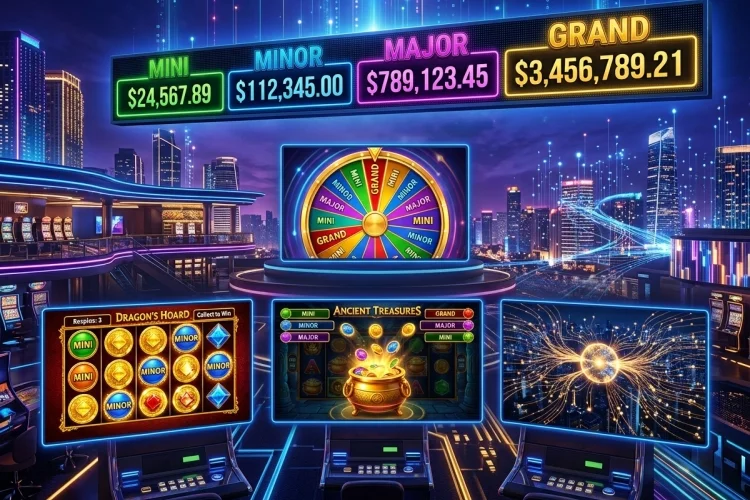
One giant jackpot sounds exciting, but having several prize levels can make a progressive slot more interesting. Instead of chasing only one enormous top prize, players may encounter smaller progressive tiers alongside Major, Mega, or Grand-level jackpots.

The Best Progressive Jackpot Slots with multiple prize levels combine that layered structure with clear rules and engaging bonus mechanics.

Some offer three tiers, while others provide four or even five progressive pools. Below, we look at notable examples and explain what those multiple levels actually mean rather than judging a slot purely by its biggest advertised number.

How Multiple Progressive Jackpot Levels Work

A progressive jackpot increases as qualifying bets contribute to a prize pool. With multi-tier systems, there are several seperate pools instead of just one.

A game might offer Mini, Minor, Major, and Mega jackpots. The lowest tier generally begins from a smaller seed amount, while the top jackpot can grow substantially larger.

The exact funding model varies between providers. Some jackpots are local to one casino or operator, while others are networked across many participating casinos or games.

Under UK Gambling Commission standards, progressive jackpot rules should explain important details such as how the jackpot is funded, its starting value, ceiling conditions where applicable, and player eligibility.

That information matters because two four-tier jackpot games can operate very differently behind the scenes.

Break Da Bank Again Mega Moolah: Four Progressive Tiers

The Mega Moolah name is one of the better-known progressive jackpot brands, and Games Global has continued extending the system to newer titles.

Break Da Bank Again Mega Moolah combines the familiar Break Da Bank theme with four progressive jackpots. Every qualifying base-game bet can potentially trigger the jackpot bonus, where a bonus wheel determines which progressive prize has been won.

That four-level setup gives the game more prize depth than a slot with only one giant progressive target.

It also highlights an important feature to compare: trigger mechanics.

Some progressive games require specific bonus symbols. Others can activate their jackpot feature independently from an obvious reel combination. Understanding that distinction is more usefull than simply comparing the current jackpot meter.

Wheel of Wishes WowPot!: A Four-Tier Network Jackpot

For players interested in large networked progressives, Wheel of Wishes is another notable example.

Games Global introduced the four-tier WowPot! system through Wheel of Wishes in 2020. The network later expanded across multiple connected titles.

The headline attraction is naturally the highest WowPot! level, but the lower tiers are an important part of the design.

A multi-tier system allows jackpot awards to occur at different scales rather than making every jackpot event dependent on reaching the very top prize.

The network has also produced some unusually large historical payouts. Games Global reported that the top WowPot! jackpot on Wheel of Wishes reached approximately €38.46 million when it was won in December 2023.

That historical result is impressive, but it should not be mistaken for a typical payout or prediction of future prize size.

Rabid Randy Gone Fishing: Five Progressive Jackpots

Players looking for more prize levels may find Rabid Randy Gone Fishing especially interesting from a mechanics perspective.

The NetEnt game features five progressive jackpots: Mini, Midi, Mega, Super, and Giga. A portion of qualifying bets contributes to each jackpot pool, although contribution percentages differ between the five tiers.

The jackpot feature can activate when the Jackpot symbol appears on reel five on the same row as the Hook Wild.

Players then enter a fishing-style jackpot game containing cash prizes and opportunities to land one of the progressive levels.

This makes the structure more layered than a basic progressive slot. There is a range of ordinary cash awards before the jackpot sequence eventually ends with either a progressive prize or the feature ending.

For comparision purposes, five independent progressive pools give this title one of the clearer multi-level systems among currently documented NetEnt games.

Age of the Gods: Four Levels Across a Jackpot Series

Playtech’s Age of the Gods series takes another approach by linking a collection of themed games to a broader progressive jackpot concept.

For example, Medusa and Monsters offers four progressive prizes: Power, Extra Power, Super Power, and Ultimate Power. Playtech states that players can potentially access these jackpots on any spin according to the game’s rules.

The interesting part here is variety.

Instead of one theme carrying the entire progressive system, the Age of the Gods concept has been used across multiple titles with different gameplay mechanics and volatility profiles. Playtech describes the franchise as one of its major progressive jackpot networks.

That can be appealing for players who like multi-level jackpots but do not want every game to feel exactly the same.

Hall of Gods: A Simpler Three-Level Structure

Not every multi-tier jackpot needs four or five levels.

NetEnt’s Hall of Gods provides three jackpots: Mini, Midi, and Mega. Players enter a bonus game where matching jackpot symbols can award one of those prizes.

This simpler structure may actually be easier to understand.

More jackpot tiers do not automatically make a game better. A three-tier system with clear trigger conditions can be more transparent than a complicated feature containing several prize meters, modifiers, and bonus stages.

The important question is how often each feature can be entered, what conditions apply, and how the progressive element fits into the base game’s overall math.

Jackpot Play Titles Offer Four Configurable Levels

Pragmatic Play also offers a different model through its Jackpot Play system.

Jackpot Play can be attached to participating titles and configured by operators as a local progressive network. It includes four tiers: Minor, Major, Mega, and Grand, each with its own jackpot seed and probability.

The feature can appear randomly during gameplay and leads into a separate mini-game.

Because this system is operator-configurable, availability can vary more than with a single standalone progressive title.

That is worth remembering whenever you see the same slot at two casinos. The presence, prize values, or eligibility requirements for an optional jackpot system may not always be identicle.

Do More Prize Levels Mean Better Value?

Not necessarily.

Five jackpots sound better than three, but jackpot count alone tells you very little about the game’s theoretical return.

RTP describes the designed long-run percentage returned as prizes across a very large amount of play. Short sessions can vary substantially because of normal volatility.

Progressive games can also allocate part of their theoretical return toward rare jackpot prizes.

That can create a game where ordinary base-game returns feel less frequent while a portion of value sits in extremely uncommon outcomes.

Therefore, when comparing the Best Progressive Jackpot Slots, consider RTP, volatility, qualifying bet rules, jackpot contribution, trigger mechanics, and whether all bet sizes remain eligible.

What Should You Check Before Choosing a Multi-Tier Jackpot?

Start with the jackpot rules rather than the biggest number displayed above the reels.

Check whether the jackpot is local or networked, which tiers are progressive, whether a minimum wager is required, and how the bonus is triggered.

Also check whether lower tiers reset to fixed seed values after being won.

Finally, remember that progressive amounts change continuously. A jackpot meter is not a measure of when the game is “due” to pay.

The prize may be larger than usual without being easier to hit.

The Best Progressive Jackpot Slots with multiple prize levels offer more than one jackpot target, with standout structures ranging from three-tier systems to five progressive pools.

Games such as Mega Moolah titles, WowPot!, Rabid Randy, and Age of the Gods show how differently those mechanics can work. Compare jackpot rules, RTP, volatility, and eligibility carefully before deciding which structure suits your preferences.

Common Myths About Progressive Jackpot Slots: Facts vs Fiction

Common Myths About Progressive Jackpot Slots: Facts vs Fiction

Progressive jackpots create plenty of excitement, but they also attract plenty of myths. When a prize climbs into the millions, it is easy to believe the slot must be ready to pay, that larger bets always have better odds, or that casinos can somehow choose when the jackpot drops.

This guide to Common Myths About Progressive Jackpot Slots separates those assumptions from the mechanics behind regulated games.

Progressive jackpots can use RNG-driven outcomes, winning-symbol triggers, mystery events, or hidden thresholds, so understanding the rules matters far more than trying to spot patterns.

Myth 1: A Jackpot Is “Due” After a Long Dry Spell

One of the oldest gambling myths is that a progressive jackpot becomes increasingly overdue simply because nobody has won it for a long time.

That is not how ordinary random outcomes work. The UK Gambling Commission explains that random games rely on statistical chance and that previous wins or losses do not change the odds of the current random game.

Imagine a jackpot-triggering combination with fixed mathematical odds. If it fails to appear for thousands of eligible rounds, those previous results do not automatically make the next round more likely to produce it.

Progressive prizes can grow while nobody wins, but a growing meter and a change in probability are two seperate things unless the game rules specifically connect them.

Myth 2: A Bigger Jackpot Always Means Better Odds

A larger prize is certainly worth more, but it does not automatically mean that the next spin has a higher probability of winning it.

Some progressive jackpots are triggered by winning symbols. Others use a random mystery event, while certain systems use a secretly selected threshold somewhere between a reset value and a maximum ceiling.

GLI’s progressive jackpot standard recognizes all of these approaches.

With a fixed symbol-trigger system, the prize can grow while the underlying triggering probability remains unchanged.

A hidden-threshold jackpot behaves differently because a secret trigger has already been selected within a specified range. Even then, players do not know the trigger value, and the meter alone does not reveal the exact winning moment.

The game rules determine which model applies.

Myth 3: You Must Always Bet Maximum to Win

“Always bet max for the jackpot” is another claim that gets repeated too broadly.

Some games may impose a minimum qualifying stake or connect jackpot probability to the player’s contribution. Other games can use different eligibility arrangements.

UK Gambling Commission guidance says jackpot rules should clearly explain eligibility and how prizes are funded. Where players contribute to a progressive pool, their chance of winning should increase in correlation with the amount contributed.

That does not mean every progressive slot requires the maximum available wager.

Before increasing a stake, read the actual jackpot conditions. If the rules say a particular wager level is required, follow that information. Do not assume that simply clicking the highest bet automatically creates the best value.

Myth 4: The Casino Chooses Who Wins

The idea of someone sitting behind a screen and deciding which player gets a multimillion-dollar progressive prize makes for a dramatic story, but it is not how regulated random jackpot systems are designed.

Random outcomes must follow defined game probabilities and rules. GLI’s progressive standards also cover jackpot triggers, controllers, record keeping, and winning-player notification.

For a symbol-triggered jackpot, a qualifying game outcome identifies the winning round.

For a mystery system, the jackpot controller can use a random event or hidden threshold.

The winner therefore emerges from the programmed jackpot mechanism rather than a staff member looking through player accounts and making a manual selection.

Myth 5: A Huge Jackpot Means the Slot Has a Huge RTP

Jackpot size and RTP are related concepts, but they are not interchangeable.

RTP describes theoretical long-term return. UKGC rules state that a progressive game’s information can show one combined base-game-plus-jackpot RTP or separate the base game and jackpot components.

A jackpot can therefore become enormous without telling you much about the base game’s ordinary returns.

Progressive jackpots are also extremely volatile because their biggest prizes are large and infrequent. The UK Gambling Commission notes that progressive performance may need to be monitored separately because those rare jackpot awards create unusually high volatility.

Do not read a seven-figure meter as if it were an RTP percentage.

Myth 6: All Progressive Jackpots Work the Same Way

The word “progressive” simply means the prize increases as contributions are added from eligible stakes. The UK Gambling Commission defines a progressive jackpot as an incremental prize growing from contributions made through play.

Beyond that basic definition, systems can vary dramatically.

A jackpot might be linked to one machine or one game, several games, multiple operators, or a much larger network.

Games Global, for example, currently lists multiple progressive products in its portfolio, including Mega Moolah and WowPot titles spread across different games.

Trigger mechanics can also vary. One title may require symbols while another uses an independent mystery event.

Treating every progressive slot as mechanically identical is therefore a major oversimplificaton.

Myth 7: If Someone Just Won, the Jackpot Is Now “Cold”

After a jackpot hits, it usually resets to a predefined amount.

That does not mean the new jackpot enters a special cold period where winning is impossible.

If the system uses random symbol-based triggers, the next eligible round still follows its mathematical rules. A previous winner does not create a memory that blocks future random outcomes.

For hidden-threshold systems, GLI standards state that a new hidden threshold should be randomly selected after the jackpot resets.

This is another example of why previous results should not be used as a prediction tool.

The jackpot may be smaller immediately after a reset, but smaller prize value and lower winning probability are not necessarily the same thing.

Myth 8: Progressive Jackpots Are Basically Impossible to Win

Progressive jackpots are usually rare by design, particularly at the largest levels, but “impossible” is obviously inaccurate.

Games Global reported that a UK player won £11,498,211 on the original Mega Moolah title in June 2025.

The important distinction is between possible and probable.

A jackpot can be legitimately won while still having extremely long odds. Advertising a huge historical prize does not tell you how likely another individual player is to reproduce the result.

Past winners demonstrate that the mechanism pays out; they are not evidence that your next session has favorable odds.

Why Reading the Jackpot Rules Matters

Progressive rules should explain how the prize is funded, how eligibility works, and how the jackpot is awarded.

UKGC guidance also requires information about what happens if two players appear to trigger the same jackpot simultaneously, including situations affected by network latency.

That makes the paytable and jackpot help screen much more useful than online theories about “hot” machines.

Before playing, check the qualifying stake, trigger type, current prize, reset amount, jackpot tier, and whether your selected game mode actually participates.

Those details explain the mechanic. A streak of recent results does not.

Common Myths About Progressive Jackpot Slots usually come from confusing a growing prize with changing odds. Jackpots are not automatically due, casinos do not simply choose winners, and maximum bets are not universally required.

Read the specific trigger and eligibility rules instead of following patterns or rumors. If you explore progressive slots, treat the jackpot as a rare random outcome rather than something you can predict.

Local vs Networked Progressive Jackpots: A Player’s Guide

Local vs Networked Progressive Jackpots: A Player’s Guide

Two progressive slots can show nearly identical reels while connecting to completely different prize systems. One may feed a jackpot controlled by a single operator, while the other contributes to a provider-wide pool shared by players across numerous casinos.

Understanding Local vs Networked Progressive Jackpots helps you identify where the prize money comes from and which rules apply. It also prevents a common mistake: assuming that every version of the same slot connects to the same jackpot meter.

Before placing an eligible wager, learn how the pool is funded, where it is available, what happens after a win, and whether the displayed RTP includes the jackpot contribution.

Learn to Recognise a Local Jackpot

Look for wording such as “local progressive,” “operator jackpot,” or “exclusive to this casino.” The terms may explain that the prize is available across one brand or several sites run by the same company.

Pragmatic Play’s Jackpot Play is an example of an operator-configured local network. It can connect several slots across that operator’s casino brands and uses four tiers with separate seeds and probabilities.

A local progressive is therefore not always limited to one individual game. “Local” refers more to the controlled operator ecosystem than to one reel cabinet.

Learn to Recognise a Network Jackpot

A networked product is generally managed across a wider provider or platform system. The same jackpot branding may appear at several independent casino operators.

Dream Drop identifies itself as a global jackpot product and connects six progressive prize levels across compatible games and platforms.

Games Global similarly operates networks containing several jackpot brands, including Mega Moolah, WowPot, and King Millions.

Look for consistent network branding rather than relying only on the title of the underlying slot.

Check How the Pool Is Funded

Progressive pools commonly grow through a percentage of eligible wagers. However, the precise contribution can differ by tier, game, and stake.

Pragmatic Play says a fixed percentage of every eligible Power Jackpot bet is added to each of its four separate pots.

The jackpot rules should state how funding works, what the starting seed is, and whether a ceiling applies. They should also explain what happens to additional contributions after a capped pot reaches its limit.

Understand Seeds, Resets, and Reseeds

The seed is the amount displayed when a jackpot starts or resets after being won. A higher seed prevents the meter from returning to an insignificant value.

The reseed arrangement determines how quickly the prize returns to a meaningful level. Relax Gaming states that Dream Drop uses a minimum 75% reseed value for its jackpot product.

Do not interpret a recent reset as meaning the jackpot is less likely to pay. The meter’s size and the trigger probability are separate concepts unless the rules explicitly connect them.

Check for Must-Drop Conditions

A must-drop jackpot is designed to be awarded before reaching a specified threshold or by a stated time. The player does not necessarily need to wait until the exact upper limit.

Dream Drop includes two must-drop jackpot levels and daily prizes designed to fall three times each day across the network.

Must-drop rules can create visible urgency, but they still do not guarantee that your own wager will trigger the award. The condition applies across all eligible network activity.

Verify Your Stake and Game Version

The same slot name can appear with different jackpot eligibility, RTP settings, or operator configurations. Some stakes may not contribute to the progressive pool.

Regulated rules should clearly state when a player is ineligible. If somebody contributes to the jackpot pool, UK technical guidance says that person should be eligible to win while playing the game.

Check the information panel after opening the slot. Confirm that the jackpot meter is live, your stake qualifies, and the selected title belongs to the advertised network.

Separate Jackpot RTP From Base-Game RTP

Progressive jackpots create unusually large and infrequent prizes. This high volatility can make their performance difficult to measure over normal periods.

The UK Gambling Commission says connected games may need to be measured at the base-game level, with the jackpot component monitored separately.

When reading RTP information, determine whether the displayed percentage combines both components or shows them individually. The higher jackpot meter does not change the basic meaning of theoretical return.

A practical comparison of Local vs Networked Progressive Jackpots starts with identifying who controls the prize pool. Local jackpots stay within a defined operator ecosystem, while networked systems connect eligible games and players across a wider provider platform.

Before playing, inspect the funding percentage, starting seed, reset value, must-drop rules, qualifying stake, current meter, and RTP display. Confirm that your exact game version participates rather than assuming every copy of the title is connected.

Use demos to learn the base mechanics, ignore claims that a jackpot is “due,” and approach eligible cash play only with a fixed entertainment budget you can afford to lose.

Multiple Jackpot Levels Explained: Top Online Slots and Features

Multiple Jackpot Levels Explained: Top Online Slots and Features

Seeing Mini, Minor, Major, and Grand prizes above a slot can make the game look straightforward. In practice, those labels may describe several very different systems.

One title might pay fixed multiples of your stake, while another connects you to progressive pots shared by thousands of players. Understanding Multiple Jackpot Levels helps you compare the real mechanics instead of judging a slot by its flashing prize meters.

The most important questions are how each tier is funded, what activates it, whether every stake qualifies, and whether the prize amount changes over time.

Once those details are clear, it becomes easier to compare classic jackpot wheels, hold-and-spin rounds, network systems, and modern collection features.

Fixed Jackpots Stay Predictable

A fixed jackpot pays a predetermined amount, usually expressed as a multiple of the current total stake. Other players and network activity do not increase its value. Pragmatic Play describes its built-in fixed prizes as separate from progressive pots.

Jackpot Blaze is a clear example. It awards five fixed levels ranging from 5x for the Mini to 1,000x for the Super Grand.

Progressive Jackpots Grow Over Time

A progressive jackpot increases as a percentage of qualifying bets is added to its prize pool. The pot resets or “reseeds” after somebody wins it.

Mega Fortune uses three progressive jackpot prizes alongside its normal reels and free-spins feature. The growing values create more variation than fixed tiers, but they do not mean that an individual player has a predictable chance of triggering the largest level.

Local and Network Jackpots Are Different

A local progressive may be connected to one casino or a limited group of games. A network jackpot connects eligible play across a broader collection of operators or titles.

Pragmatic Play’s Jackpot Play product supports four locally hosted tiers, while its Power Jackpot uses four progressive network levels on an updated Wolf Gold game.

The size of the network can affect how quickly pots grow, but the eligibility and trigger rules remain more important to an individual player.

Must-Drop Levels Have an Upper Threshold

A must-drop jackpot is designed to be awarded before its value reaches a specified maximum threshold. This does not mean it will wait until the final possible moment.

Relax Gaming describes the Mega and Major levels in Dream Drop as must-drop jackpots. Its current product includes six progressive prizes, with a Daily level that falls three times every day across compatible games.

These rules create a different structure from a progressive prize without a visible guaranteed-drop point.

Jackpot Triggers Can Vary Widely

Some prizes activate randomly from an eligible spin. Others require jackpot symbols, a wheel, a hold-and-spin round, or a completely filled grid.

Divine Fortune triggers its bonus through at least three special coin symbols. Filling one, two, or three rows awards the Minor, Major, or Mega jackpot respectively.

Jackpot Blaze instead collects different award symbols during a tumble sequence. Each jackpot tier has its own collection target.

More Tiers Do Not Guarantee Better Value

Five or six prize levels may create more visible feature variety, but the number alone does not reveal the probability of winning, the house advantage, or the likely session experience.

Check the exact RTP configuration, volatility, qualifying stake, and contribution rules. Also determine whether the jackpot portion changes the overall theoretical return.

A good comparison should include the base game. Most spins will be ordinary rounds, so the regular symbols and bonus mechanics should remain entertaining without a jackpot result.

Multiple Jackpot Levels can be fixed, progressive, local, networked, or must-drop. Jackpot Blaze uses predictable stake multipliers, Mega Fortune offers three growing prizes, Divine Fortune connects each level to grid progress, and Dream Drop provides a broader network structure.

Pragmatic Play’s Power Jackpot adds a four-tier community model. Before choosing a game, identify how each prize is funded and triggered.

Confirm whether your selected stake qualifies and whether the exact feature is available in your jurisdiction. Use demo mode to learn the ordinary mechanics, avoid treating a rising meter as a signal, and keep real-money play within an affordable entertainment budget.

Can You Play Jackpot Slots in Demo Mode? A Beginner’s Guide

Can You Play Jackpot Slots in Demo Mode? A Beginner’s Guide

Jackpot slots are exciting because they add an extra prize layer to the usual reels, wilds, and bonus rounds. However, risking money just to understand an unfamiliar jackpot system is not always appealing.

The good news is that many providers let adults Play Jackpot Slots in Demo Mode using virtual credits. You can usually examine the reel layout, paytable, bonus triggers, and jackpot presentation without making a deposit.

The important limitation is that demo prizes have no cash value. A virtual jackpot can show you how the feature looks, but it cannot be withdrawn. Progressive jackpot access may also vary by game, operator, and jurisdiction.

Can Jackpot Slots Be Played for Free?

Yes, many jackpot titles have free-play versions on official provider websites or licensed casino platforms. NetEnt’s Mega Fortune and Divine Fortune, for example, appear on Evolution’s free-play game site with their jackpot mechanics explained.

Availability is not universal. A provider may offer a demo while a particular casino disables it, and local laws may restrict free access to gambling-style games.

Always use an official or properly licensed source rather than an unknown copy of the game.

What Does Demo Mode Include?

A typical demo provides virtual credits and lets you use the normal spin controls. The reel layout, symbols, paylines, wilds, scatters, and ordinary bonus rounds should generally resemble the real-money version.

In Great Britain, a free-play game offered beside its cash version on the same licensed website must use the same rules and accurately represent the likelihood and distribution of prizes.

This makes demo mode useful for learning. It does not mean one short free session will predict future results.

Can You Win a Real Jackpot in Demo Mode?

No. Regulatory definitions describe play-for-free as a demonstration version in which the customer does not stake or win money or anything of monetary value.

You might see a jackpot animation or receive millions of virtual credits, but the prize remains fictional. It cannot normally be transferred into a casino account or withdrawn to a payment method.

Treat every demo jackpot as an illustration of the feature rather than a real award.

How Do Progressive Jackpots Work in a Demo?

A progressive jackpot grows as eligible real-money wagers contribute to a shared prize pool. It may be connected to one machine, several games at one casino, or a wider network of operators.

Because free mode contains no real-money stakes, a progressive amount displayed in a demo is necessarily illustrative rather than a claim on the live prize pool. This follows from the regulatory definitions of free play and progressive jackpots.

Some demos simulate the jackpot trigger, while others disable it. Check the information panel for an explanation.

What Jackpot Games Can You Explore?

Mega Fortune uses a luxury theme, five reels, 25 betting lines, free spins, and a triple progressive jackpot bonus. Its three jackpot levels are a central part of the game’s identity.

Divine Fortune offers three jackpot levels alongside Falling Wild Respins and free spins. Its official listing gives the game a theoretical RTP of 96.59% and a medium-volatility rating.

These games demonstrate different ways of placing jackpot features around a standard video-slot structure.

Are Jackpot Rules Always Identical?

The basic game should be represented accurately on a regulated demo offered beside its cash counterpart. However, live progressive eligibility may depend on stake level, location, operator participation, and whether the jackpot network is active.

UK technical standards state that players who are not eligible for a progressive jackpot should be told clearly, along with the relevant theoretical RTP. Jackpot rules must also explain how prizes are determined and awarded.

Read the rules inside the actual cash game before assuming that every stake qualifies.

You can often Play Jackpot Slots in Demo Mode to learn the reels, paytable, bonus triggers, and general jackpot presentation without risking cash. Mega Fortune and Divine Fortune are examples of recognised jackpot titles available through official free-play pages.

However, virtual wins cannot be withdrawn, and a progressive jackpot meter in demo mode does not give you access to the real network prize. Some features may also be unavailable because of local rules.

Start with an official demo, read the jackpot eligibility conditions carefully, and use free play to understand the game-not to predict whether a cash jackpot is about to land.